Tuesday, June 06, 2006

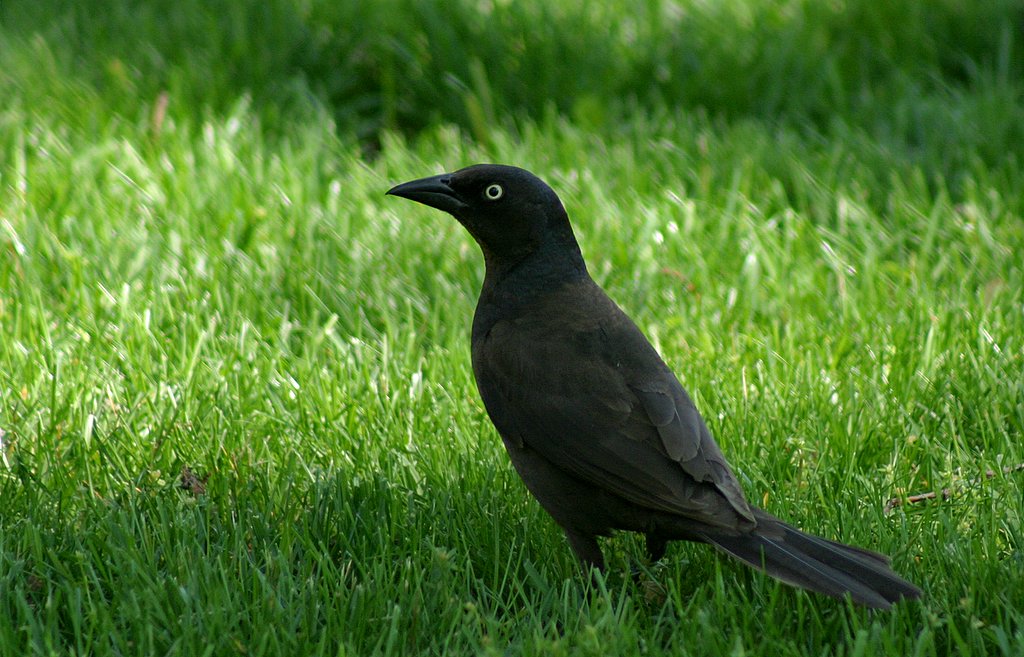
Grackle

Grackle, in our front yard this morning! photo by Mary Stebbins, click on image to view larger. I love the eye.


Common grackle Quiscalus quiscula
Identification Tips:
Length: 10-12 inches
Very long tail
Long bill
Frequently gathers in large flocks
Adult:
Entirely black plumage
Entirely purple or purple and greenish iridiscence to plumage
Pale eye
Juvenile:
Dark eye
Dark brown plumage
Similar species:
The Common Grackle is similar to blackbirds but is larger with a much longer tail. Male Great-tailed and Boat-tailed Grackles are similar but larger with longer tails.
Length and wingspan from: Robbins, C.S., Bruun, B., Zim, H.S., (1966). Birds of North America. New York: Western Publishing Company, Inc. Posted by Picasa

Wednesday, May 31, 2006

Coyote

Coyote Posted by Picasa

Sunday, May 21, 2006

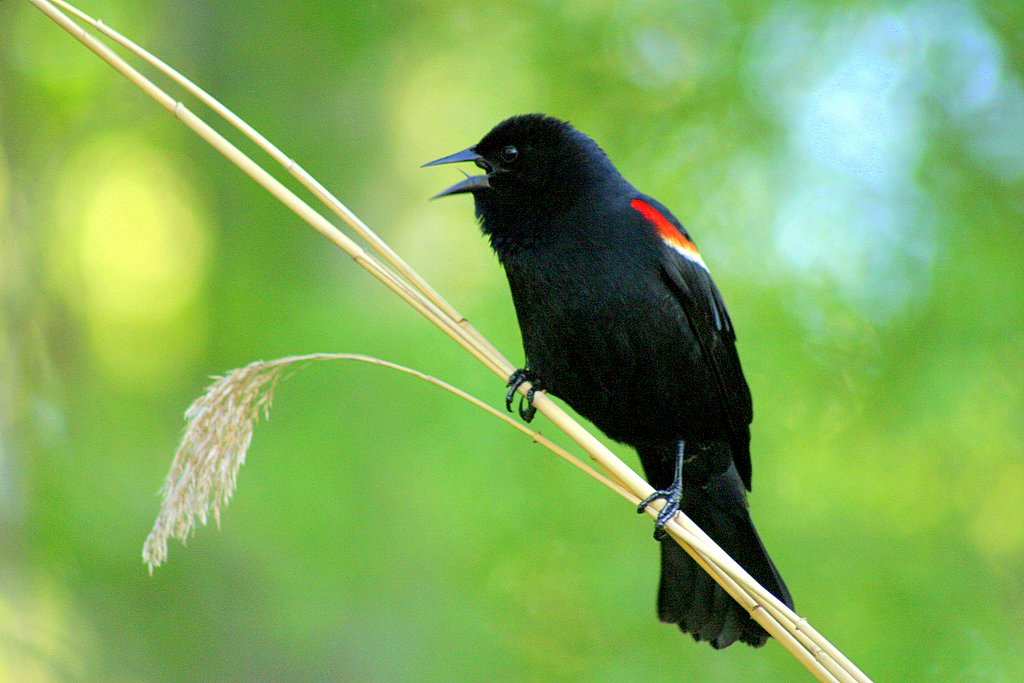
Redwing on Phragmites, Detroit Metrobeach

Redwing on Phragmites, Detroit Metrobeach, by Mary Stebbins. Click image to view larger.


We had an exciting walk at Detroit Metrobeach yesterday. We saw baby bunnies playing with what could only be called joy. We saw a bald eagle circle over the pond where we were watching swallows skim the surface fo the water and a huge snapper trying to soak up the sun. We saw geese with young geese and red-winded blackbirds and robins and so many other interesting things.

This red-winged black bird male was singing it heart out, marking its territory. Posted by Picasa

Monday, May 15, 2006

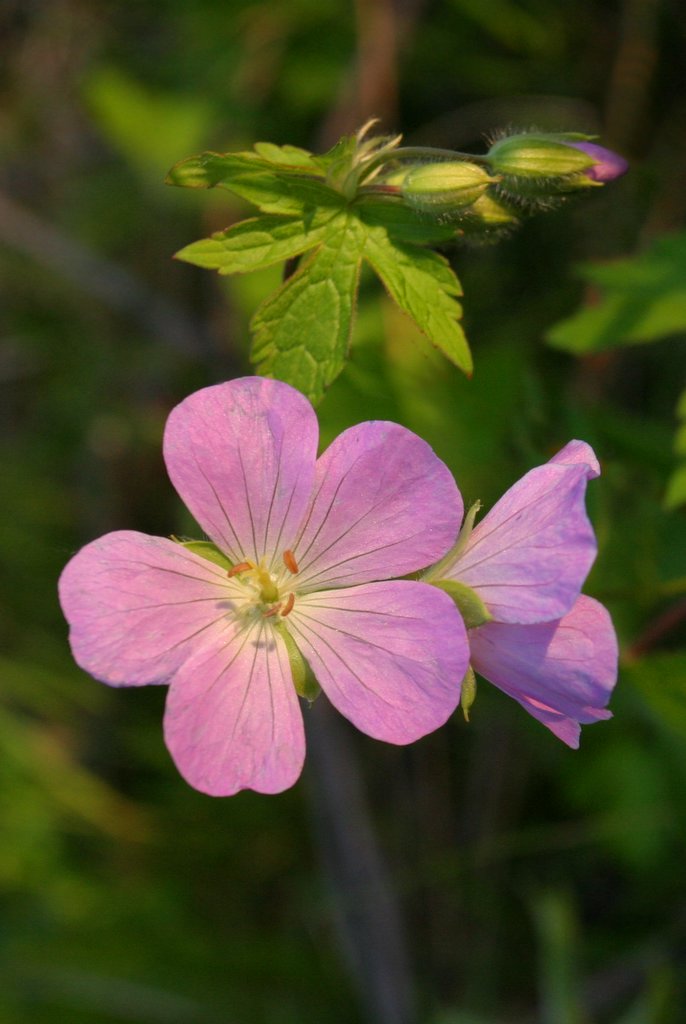
Wild Geranium

Wild Geranium, Geranium maculatum.

• Family: Geranium (Geraniaceae)
• Habitat: woods• Height: 1-2 feet
• Flower size: 1 to 1-1/2 inches across
• Flower color: lavender, pink, white
• Flowering time: April to June
• Origin: native Posted by Picasa

Wednesday, May 03, 2006

Marsh Marigolds

Marsh Marigolds, or Caltha palustra, photo by Mary Stebbins. Click on image to view larger. Also called "Cowslips," Marsh marigold are edible--but before they flower. They become very btter once they flower. They brighten up the swamps and wetlads in the early spring.

These are in flower today at Great Bear Farms near Phoenix, NY. Posted by Picasa

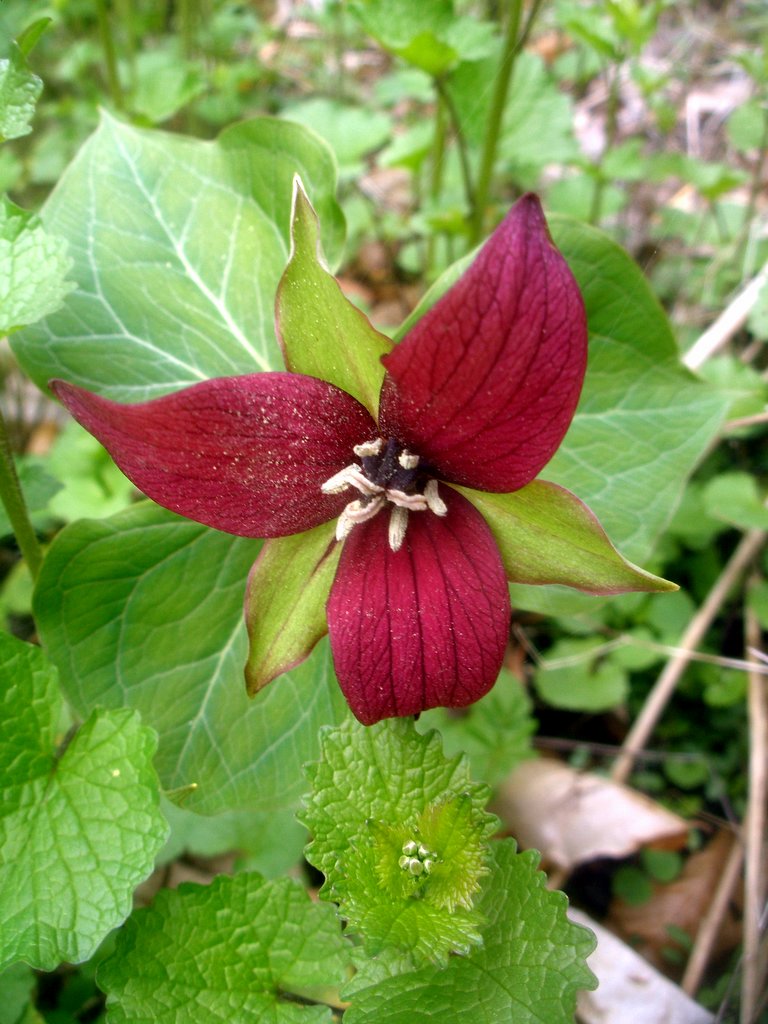
Wake Robin

The Wake Robin, or Red Trillim is out in force in the spring woods today. Red Trilliums are fertilized, in part, by carrion flies. They have two odors, a sweet pleasant small for bees ad a terrrible rotting meat smell of carrion beetles. When the red trilliums reach peak flowering, the black flies start biting. And the morels are out. Photo by Mary Stebbins, Click on image to view larger.

Phenological notes apply to specific areas; this ake robin is flowering today at Great Bear Farms Natural Area just north of Phoenix NY, off rte 57.

Wake Robins, or Stinking Benjamins, are on the NY State Protected list and should not be picked, Posted by Picasa

Thursday, March 30, 2006

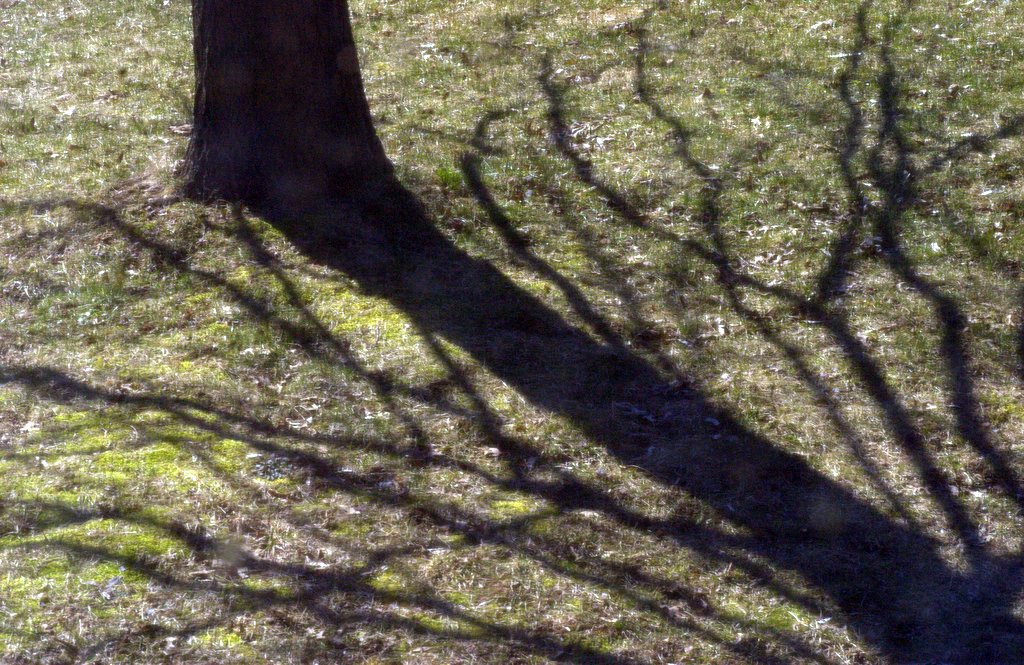
Shadows: excurrent branching, photo y Mary Stebbins. Click on image to view larger.

This s a pin oak, or the shadows thereof. It has "excurrent" branches, like a pine or spruce. Actually, though, only the branches halfway up the trunk come straight out. The ones aove go up and the ones below go down. Posted by Picasa

Wednesday, March 29, 2006

Milkweed Pod

Milkweed Pod, left over from last year. Photo by Mary Stebbins. The eeds releasing now in spring will be growing int new milkweeds and feeding the monarchs soon. Clcik on image to view larger. Posted by Picasa

Monday, March 27, 2006

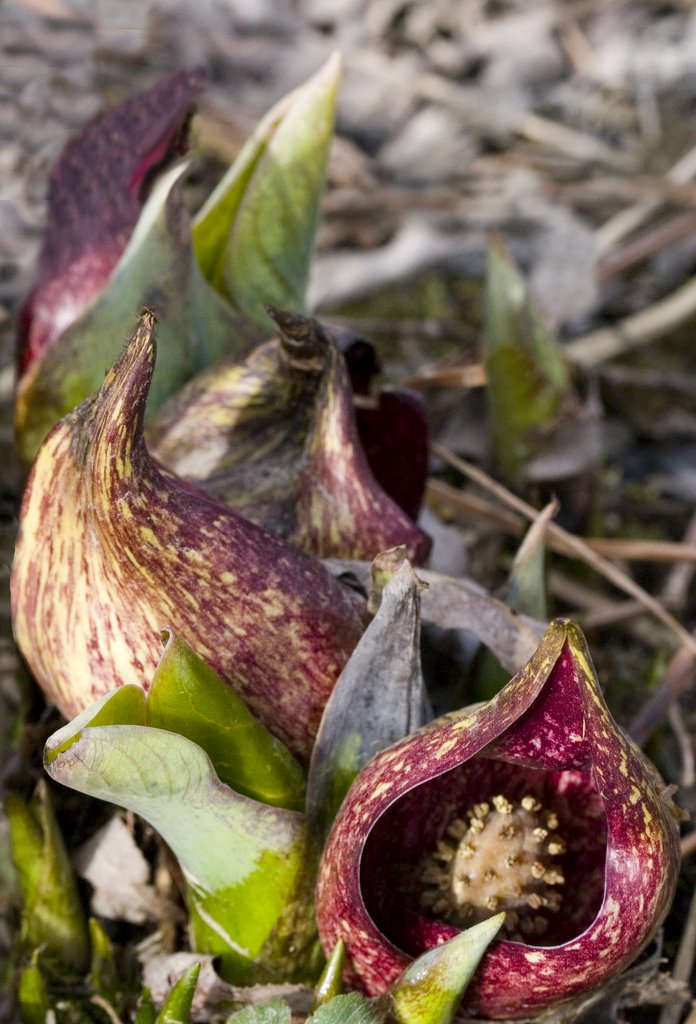
Season/signs of spring: Skunk Cabbage Flowering

Season/signs of spring: Skunk Cabbage Flowering, taken 3-27-06 at Hamlin. In upstate NY, one of the signs of sring is the flowering of the skunk cabbage in the swamps, and here it is, in full flower.Click on image to view larger. Photo by Mary Stebbins Posted by Picasa

Sunday, March 26, 2006

Protective Coloration

Rabbit Photo by Mary Stebbins. This rabbit was really hard to spot!!! Posted by Picasa

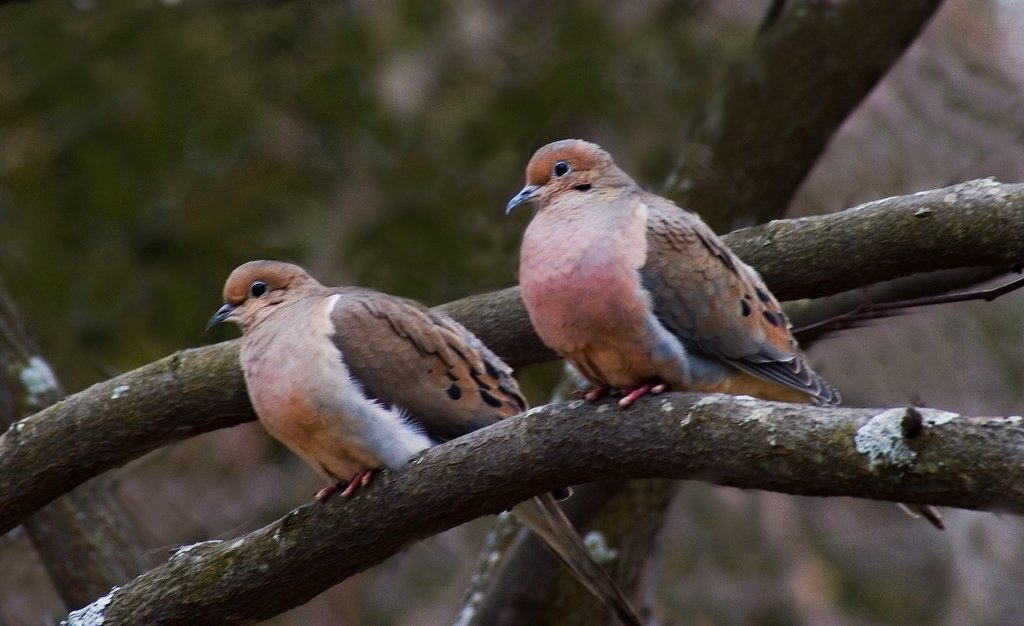
Mourning Doves

Mourning Doves, photo by Mary Stebbins. Click on image to view larger.

These doves and another pair took over 2 old robins' nests in the past, but the nests have been ruined by bad weahter over the winter and they are hanging around. I wonder if they will build or find another nest.

Anyone know anyting about dove behavior? Last year and the three previous years, I had one et nesting in my bedroom window and one set in my sudy window. It was great to watch them raise their young. Posted by Picasa

Tuesday, February 07, 2006

Group: The Formosan Deer

Group: The Formosan Deer, by Mary Stebbins. These deer used to roam free at Belle Isle in Detroit, but now they are sadly locked up.

For the Thursday Photo Challenge, taken on a walk at Belle Isle. Posted by Picasa

Friday, January 20, 2006

Earthstars

Earthstars, photo by Mary Stebbins. Click on image to see larger.

Earthstars belong to a group of fungi called Gasteromycetes, or "stomach fungi". Their fruiting bodies are a stomach-shaped sac filled with dry spores. They are related to puffballs.

For more info, click herePosted by Picasa

Sunday, January 15, 2006

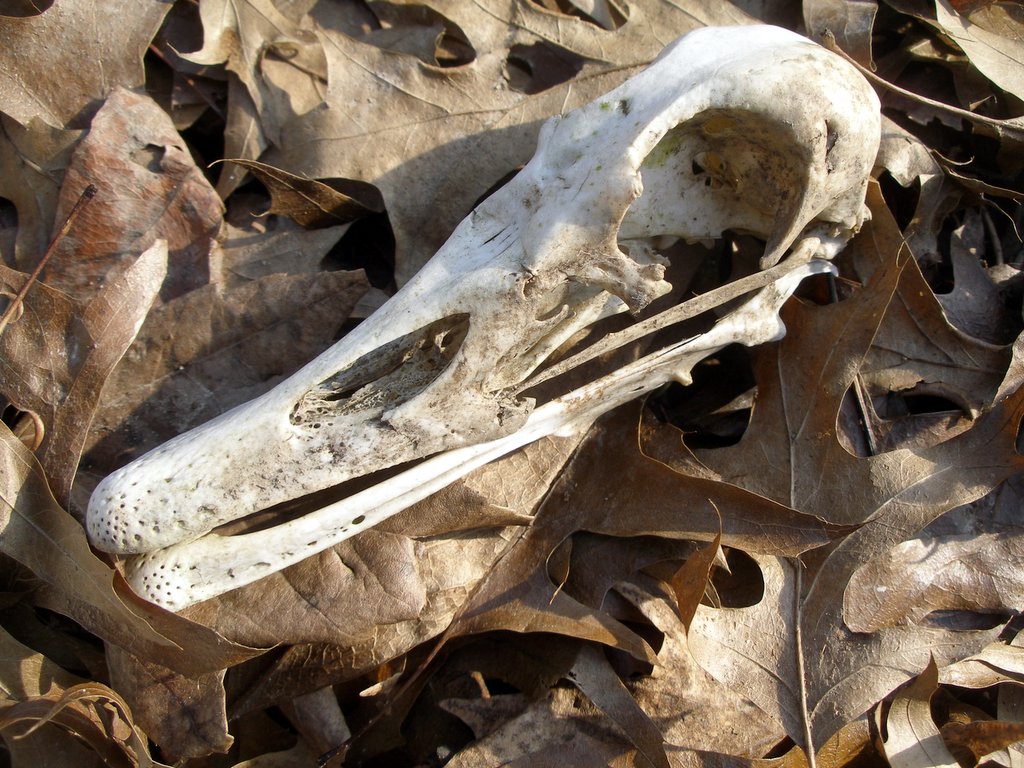
Goose skull

Goose skull, photo by Mary Stebbins. Click on photo to see larger. I found this Canada goose skull and another alog a wetlands in Hamilton Ontario Canada, along with another bird skull I have yet to idenitfy. The wide spatulate beak is clearly evident here. Posted by Picasa

Sunday, December 25, 2005

Golden Crowned Kinglet

Golden Crowned Kinglet, by Mary Stebbins, Lakeshore Parkway, Grosse Pointe Shores, MI.

We found this bird dead but still very warm on our Christmas eve walk. It seemed strange to find a bird that primarily eats insects and a bit of fruits and seeds active in the winter. We don't know how it died.

Click on picture to see larger. Posted by Picasa

The Kill

The Kill, by Mary Stebbins. This picture was taken out past the Marble Lighthouse at Bellle Isle in Detroit. A large predatory bird (hawk or owl) appears to have captured a small songbird (such as a sparrow). You can see, int his photo, the wing prints of both the large and small bird, the tail print of the large bird, and what is apparently the plowing mark made by one of the feet. Click on the picture to see larger.

I also just saw a Merlin (Pigeon Hawk) eat a pigeon in our back yard.

Mary, Christmas Day, 2005 Posted by Picasa

Friday, September 23, 2005

Sorry about the word Verification thing

I had to add word verification to my comments becasue I was getting a ton of comment spam which was wasting my time deleting it all! Sorry!

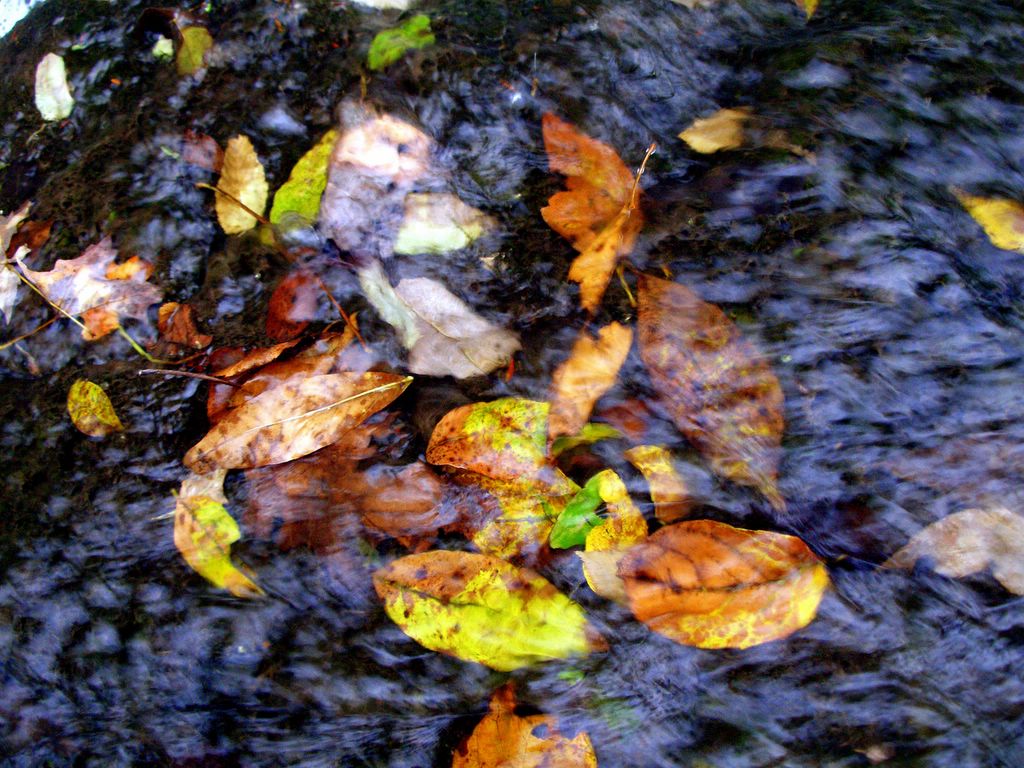
Fall in the Creek


The First Day of Fall on the Creek. The creek was full of fallen leaves yesterday, on the first day of fall--a few were bright reds or oranges, but most were yellows, browns and greens. We'll get brighter colors as cold nights and bright sunny days cause a waxing at the connections points and a using up of the chlorphyll still stored in the leaves. This will expose the carotin and xanthophyll for yellows, reds and oranges. Photo by Mary Stebbins

Another view of the first day of fall at Silk Creek is at SilkCreek Portal.Posted by Picasa

Friday, August 05, 2005


Gold Dragonfly and Blue Damselfly. Note that the dragonfly is larger and holds its wings to the side while the damselfly is smaller, more delicate, and holds its wings behind it. Posted by Picasa

Saturday, July 23, 2005


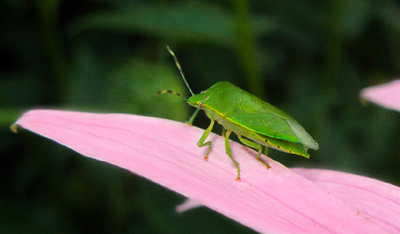
Stinkbug on Echinecea Petal, photo by Mary Stebbins. Stink bugs release a "vile" odor when disturbed. Sometimes, if you smell a bad odor while mowing the lawn, you've hit a stink bug. Posted by Picasa